
Features and Operational Principles of School Drinking Water Equipment
No consumption, no charge. This not only ensures fair billing but also improves the supporting hardware facilities on campus.
Energy-Saving & Eco-FriendlyAmid the growing energy scarcity, this equipment completely eliminates unnecessary energy waste in production, packaging, storage and transportation, bringing benefits to both the nation and the people.
Campus Direct Drinking Water Cooperation Program
To address the challenges of ensuring healthy drinking water for students and reducing expenses for schools in the city, while upgrading campus hardware facilities, our company has specially designed a comprehensive cooperation program for campus direct drinking water construction.
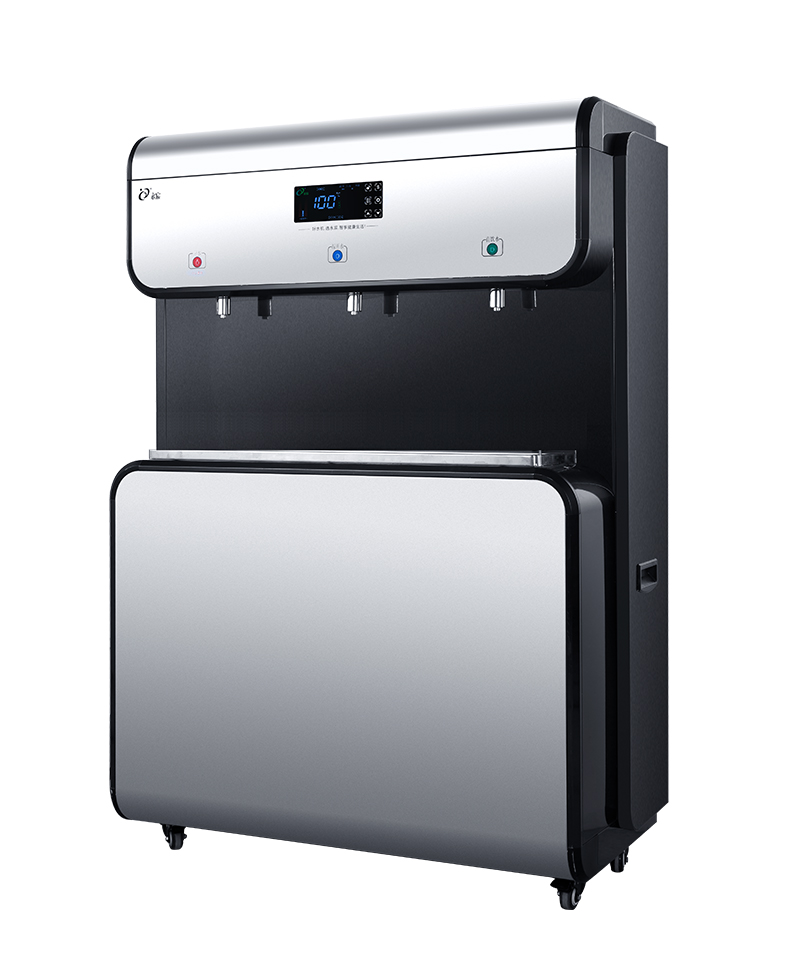
We will install direct drinking water equipment with sufficient capacity based on the current number of people in the school.
The entire investment in the equipment (including water treatment devices, terminal intelligent card-swiping dispensers, pipelines and construction) will be borne by our company, with zero cost required from the school.
The water and electricity fees for equipment operation will also be covered by our company (excluding those for standalone water dispensers).
We will be responsible for the maintenance of direct drinking water equipment and systems, including water quality testing, repair and maintenance, and filter replacement.
We will charge direct drinking water fees based on the actual water consumption of teachers and students in the school.
An energy-saving water boiler is a device that converts electrical or chemical energy into thermal energy to heat water to boiling. Its capacity ranges from approximately 2L to 200L, and the power ranges from 600W to 22KW, catering to the needs of different groups.
Traditional water boilers are the most common type, with a history of several decades. However, as market requirements for health, safety and energy conservation continue to rise, their market share has gradually shrunk, and they will eventually phase out. Nevertheless, due to their simple structure and low price, they still have a considerable user base in the market.
Heating Method: Storage-type heating (float-controlled).
Tank Design: Only one mixed cold and hot water tank, resulting in the mixing of raw (cold) and boiled (hot) water.
Heat Preservation Defect: When the tank is full and no one is fetching water, the temperature drops rapidly due to the lack of insulation layer and only a decorative top cover. A single high-power heating element is used for both heating and heat preservation, leading to high power consumption and poor energy efficiency.
Temperature Indication: Only relies on a temperature gauge and vague red/green light indicators.
When you hear the operating sound of the energy-saving water dispenser, it indicates that the direct drinking water equipment has entered the heating mode. At this time, the digital display will show the temperature gradually rising—water will only flow out of the faucet when it reaches 100°C; no water will be dispensed if the temperature is below 100°C.
During the water supply inspection, if any problem is detected in even one link, it means the unit’s direct drinking water equipment is not suitable for purchase.
Product Quality & Manufacturer Selection
When purchasing direct drinking water equipment for institutions, buyers should verify the product brand and check for marks such as the implementation standard number on the package box, hygiene approval document number, and electrical product certification number. These marks indicate that the product meets the corresponding quality standards.
That concludes our guide on selecting institutional direct drinking water equipment. In addition to choosing equipment that matches the number of people in the institution, buyers should also understand the equipment parameters for rational selection. A comprehensive evaluation should be conducted based on factors such as the number of water consumers, drinking habits, installation location, power supply line capacity, and chilled water cooling rate.
Moreover, the equipment pioneered critical boiling control technology, which can effectively sterilize water and ensure drinking water safety. It is understood that Naco Intelligent Campus Direct Drinking Water Dispensers not only adopt microfiltration membrane combined with activated carbon coating technology, but also avoid water quality deterioration caused by repeated boiling, truly eliminating "reboiled water". By controlling water at the critical boiling point, the equipment also reduces energy waste from repeated heating, improves the taste of drinking water, and completely resolves the safety hazards of pressure-type energy-saving drinking water equipment. It prevents the consumption of raw water, operates under zero pressure, and features a molded water tank. The model can be selected according to the number of users it serves, with energy consumption only 1/[Note: The original text is missing a specific figure here] that of ordinary water boilers, ensuring ease of use and peace of mind. With the same power rating, its performance is superior to traditional equipment.
Yongchen Energy Conservation: A Leader in Next-Generation Campus Drinking Water EquipmentYongchen Energy Conservation stands out as a pacesetter in next-generation campus drinking water equipment. The company’s product range mainly includes student water dispensers, campus water dispensers, school water dispensers, factory water dispensers, hospital water dispensers, and stainless steel water dispensers, among other series.
Boasting strong technical strength and a sound qualification system, the company holds special qualification certifications and inspection reports for relevant drinking water equipment government procurement projects. It is also recognized as one of the Top 10 Energy-Saving Water Dispenser Brand Service Providers in Guangdong Province.
Dedicated to delivering one-stop total solutions for healthy drinking water, Yongchen caters to a wide array of settings including schools, factories, kindergartens, hospitals, hotels, railway stations, airports, restaurants, enterprises and public institutions, government agencies, as well as household water supply needs.
24/7 National Service Hotline: 400-8925-988